Metal Roofing Benefits for Your Home in Miami & South Florida

Written and reviewed by Eduardo Garcia, Co‑Founder of Zen Metal Roofs, with nearly two decades of roofing and construction experience in South Florida.
Living in Miami, Broward, or Palm Beach means dealing with strong sun, humidity, coastal winds, and hurricanes. Your roof has to do more than just look good—it has to protect your home in one of the toughest climates in the country.
Metal roofing is quickly becoming the top choice for South Florida homeowners because it offers durability, energy savings, and long‑term value that traditional roofs can’t match. This article focuses on the real benefits of metal roofs in our climate and points you to other guides when you want deeper details on types, costs, or technical specs.
If you want a big‑picture overview of systems, costs, and lifespan, you can also read our Miami Metal Roof Guide.
Why Are So Many Miami Homeowners Switching to Metal Roofs?

The shift to metal roofs in South Florida isn’t a trend—it’s a response to real problems with traditional roofing in a hot, storm‑prone, coastal environment.
Compared to asphalt shingles and other common roofing materials, modern metal roofs offer:
Longer life (40–70+ years) when installed and maintained correctly.
Stronger storm performance in high‑wind and heavy‑rain events.
Better energy efficiency in relentless Miami heat.
Less maintenance over the life of the roof.
Improved curb appeal and resale value.
For a deeper breakdown of how different systems and materials perform, you can compare them in our Metal Roofing Types: Materials & Styles Best Suited for Miami & South Florida guide.
1. Exceptional Durability and Lifespan
Metal roofs are built to last. In South Florida, a properly installed metal roof typically offers a service life of 40 to 70 years, while standard asphalt shingles often need replacement in 15 to 20 years.
Key durability benefits:
Resist high winds, heavy rain, and flying debris common in hurricane season.
Handle year‑round UV exposure without curling, cracking, or drying out like shingles.
Perform well in coastal environments when paired with the right materials (such as Galvalume steel or aluminum) and coatings.
Our Miami Metal Roof Guide explains more about lifespan and how metal roofs compare to asphalt and tile over decades.
2. Energy Efficiency in South Florida Heat
Miami summers are hot, humid, and long. Your roof plays a big role in how hard your air conditioner has to work. Metal roofs help by reflecting more of the sun’s energy away from your home.
How metal roofs help with energy:
Reflect solar heat, reducing attic temperatures and easing the load on your AC system.
Homeowners often report lower energy bills, especially during peak summer months.
When combined with cool‑roof coatings and lighter colors, metal roofs can significantly cut heat gain.
If you want to understand how coatings and colors affect performance, read Galvalume Steel & Premium Coatings for Long‑Lasting Metal Roofs and our Englert Color Options for Series 1300 & 2000 Standing Seam Roofs.
3. Low Maintenance Compared to Shingles and Tile
Traditional shingles can crack, curl, grow algae, or lose granules in heat and heavy rain. Tile roofs can break, absorb water, and need frequent repairs. Metal roofs avoid many of these headaches.
Metal roofing benefits for maintenance:
No moss, mold, or curling like you see on old shingles.
No broken tiles to constantly replace after storms or from foot traffic.
Fewer worries about loose or missing pieces when installed with concealed fasteners and modern systems.
Most metal roofs only need:
Periodic inspections
Gutter and debris cleaning
Occasional rinsing in high‑salt areas
Our Metal Roofing Types piece also covers basic maintenance tips for each system.
4. Stylish Curb Appeal and Higher Resale Value
Metal roofs aren’t just industrial panels anymore. Today, they come in styles and colors that work with almost any architecture in Miami and South Florida.
Design benefits:
Standing seam metal roofs create sleek, modern lines and are popular on contemporary and coastal homes.
Metal tile systems mimic traditional barrel and “S” tile found in Mediterranean and Spanish‑style homes, but with less weight and maintenance.
Wide range of metal roof colors, from earthy browns to cool coastal grays, matte blacks, and custom shades.
Well‑designed metal roofs often:
Boost property value
Stand out in listings
Help homes show better during resale
For design ideas and how color affects performance, see Englert Color Options for Series 1300 & 2000 Standing Seam Roofs and our Standing Seam vs. Metal Tile comparison.
5. Fire Resistance: Protection That Goes Beyond the Storm
One of the most overlooked benefits of metal roofing is fire resistance. In electrical storms or high‑risk situations, a roof that doesn’t ignite can make a big difference.
Most metal roofs carry a Class A fire rating, the highest rating available.
Metal won’t burn, crack, or fuel a fire like wood shakes or certain shingle products.
For homes in Miami‑Dade and Broward where lightning is common, this is a real safety upgrade.
6. Lower Homeowners Insurance (In Some Cases)
Insurance companies care about risk. Roofs that resist wind, fire, and impact tend to generate fewer claims, and metal roofs perform well in all three areas.
Metal roofs are:
Highly resistant to wind uplift, impact, and fire.
Less likely to suffer storm damage or leaks when installed correctly.
Because of this, many insurers view metal roofs as safer and may offer:
Wind‑mitigation credits
Potential premium discounts (often quoted in the 10–35% range, depending on the carrier)
Actual savings depend on your insurer and individual policy, but upgrading to a metal roof is often a key part of a long‑term risk‑reduction strategy.
For the cost side of the equation, you can review real price ranges in How Much Does Metal Roof Installation Cost in Miami?.
7. More Reasons Homeowners Love Metal Roofs
Beyond the big benefits above, your original article highlights several more advantages:
Eco‑friendly
Metal roofs can be made from recycled materials and are 100% recyclable at end of life.
Longer lifespan means fewer tear‑offs and less material in landfills.
Sheds water fast
Smooth surfaces and interlocking panels help water run off quickly—ideal for tropical downpours and storm events.
Lightweight
Easier on your home’s structure compared to heavy concrete or clay tile.
Often reduces the need for extra structural reinforcement when upgrading from shingles.
Solar‑ready
Standing seam metal roofs make it easy to mount solar panels using clamps, without drilling holes through the panels.
The long life of a metal roof (often 40–70+ years) means it can outlast your solar system, so you’re not forced to re‑roof mid‑way.
For a combined look at performance, sustainability, and system choices, see the Miami Metal Roof Guide.
Understanding the Main Metal Roofing Types (At a Glance)

Before installing a metal roof, it helps to understand the major systems you’re likely to choose from.
We focus on three for Miami homes:
Standing Seam Metal Roofs
Vertical panels with raised seams and hidden fasteners.
Great for modern and high‑end homes in areas like Pinecrest, Weston, and Boca Raton.
Learn more on our Standing Seam Metal Roof Installation in Miami page.
Metal Shingles
Look like asphalt shingles but perform like metal.
Work well for traditional and transitional home styles that want a familiar look with better durability.
Metal Tiles
Replicate the look of clay or barrel tile without the weight or fragility.
Popular in Mediterranean and Spanish‑style homes.
For details on the systems we install, see
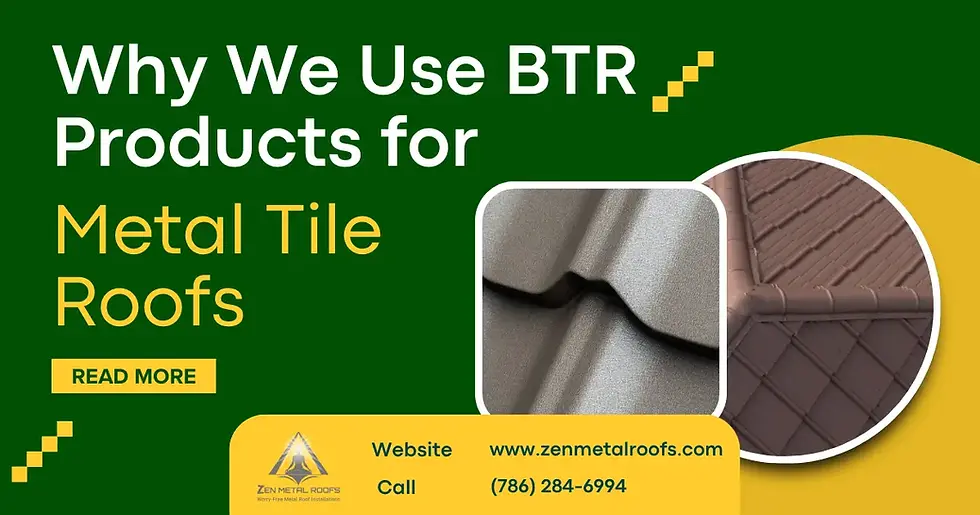
Metal Tile Roofing Installation Miami and Why We Use BTR Products for Metal Tile Roof Installations in Miami
We do not install or recommend corrugated/exposed‑fastener metal panels for Miami homes, because exposed screws create many potential leak points and do not perform well long‑term in hurricane and UV conditions.
For a full comparison of systems and materials, check Metal Roofing Types: Materials & Styles Best Suited for Miami & South Florida.
Metal Roofs vs. Traditional Roofing Materials
Your original blog includes a simple comparison table. Here’s an updated, easy‑to‑read version:
Feature | Metal Roofs | Asphalt Shingles |
Lifespan | 40–70+ years | 15–20 years |
Storm resistance | Highly resistant | Moderate |
Energy efficiency | High | Low |
Maintenance | Minimal | Frequent repairs |
Weight | Lightweight | Moderate |
Fire rating | Often Class A | Varies |
Sustainability | Recyclable, long‑lasting | Short‑lived, more waste |
Curb appeal | Modern or classic, customizable | Standard |
Common Misconceptions About Metal Roofs
Your benefits blog already does a good job of addressing myths.
“Metal roofs attract lightning.”
Metal conducts electricity, but it does not attract lightning. If a metal roof is struck, it can help safely disperse the charge and is non‑combustible, which can actually improve safety compared to flammable materials.
“Metal roofs are noisy during rain.”
When installed over solid decking with proper underlayment, metal roofs are no noisier than other roof systems. Inside the home, most people cannot tell the difference.
“Metal roofs dent easily.”
While large hail or major debris can cause dents, most modern metal roofs are designed to resist denting under normal conditions. Thicker gauges and certain profiles improve dent resistance.
“Metal roofs leak more.”
Leaks usually come from poor installation, not the metal itself. Properly installed standing seam and metal tile systems are among the most watertight roofing options available.
“Metal roofs devalue homes.”
In reality, metal roofs often increase resale value because buyers appreciate long lifespan, lower maintenance, and modern styling.
For more pros, cons, and context, you can also see the “Pros & Cons” section in the Miami Metal Roof Guide.
The Cons of Metal Roofing: What to Consider
Even though the advantages are strong, it’s fair to look at the downsides.
Main drawbacks:
Higher initial cost
Metal roofing usually costs more upfront than asphalt shingles.
But when you factor in at least one avoided re‑roof, fewer repairs, and potential energy savings, long‑term value is strong.
Installation complexity
Metal roof installation requires trained professionals.
Improper installation can lead to leaks, noise, or premature wear, so choosing the right contractor is critical.
Expansion and contraction
Temperature changes cause metal to expand and contract.
Good systems use clips and detailing that allow movement without stressing the panels or fasteners.
For cost details and realistic price ranges, read How Much Does Metal Roof Installation Cost in Miami?.
Is a Metal Roof Worth It for Your Home in Miami?
Based on everything in this article—and across our other guides—the answer is yes, especially if you care about long‑term performance and plan to stay in your home.
Metal roofs are a smart fit if you want:
Long‑term protection against extreme weather.
Better energy efficiency in a hot climate.
Reduced environmental impact through durability and recyclability.
Stronger ROI than most other roofing materials over time.
For a broader decision‑making framework, including types and costs, you can also read:
Considering a Metal Roof? Contact Zen Metal Roofs
Zen Metal Roofs specializes in metal roof installation across Miami‑Dade, Broward, and Palm Beach. Whether you’re comparing options, planning a new build, or ready for a full roof replacement, we’re here to help you choose a system that fits your home, neighborhood, and budget.
To explore next steps:
Start with our
for a full overview.
Review pricing in
Compare systems in Standing Seam vs. Metal Tile: Which Zen Metal Roof Is Right for Your Miami Home?.
When you’re ready, you can Schedule Your Free Estimate and get expert guidance, clear pricing, and a roof designed for South Florida’s toughest weather.